Nissel KII RGP – Cantor Barnard
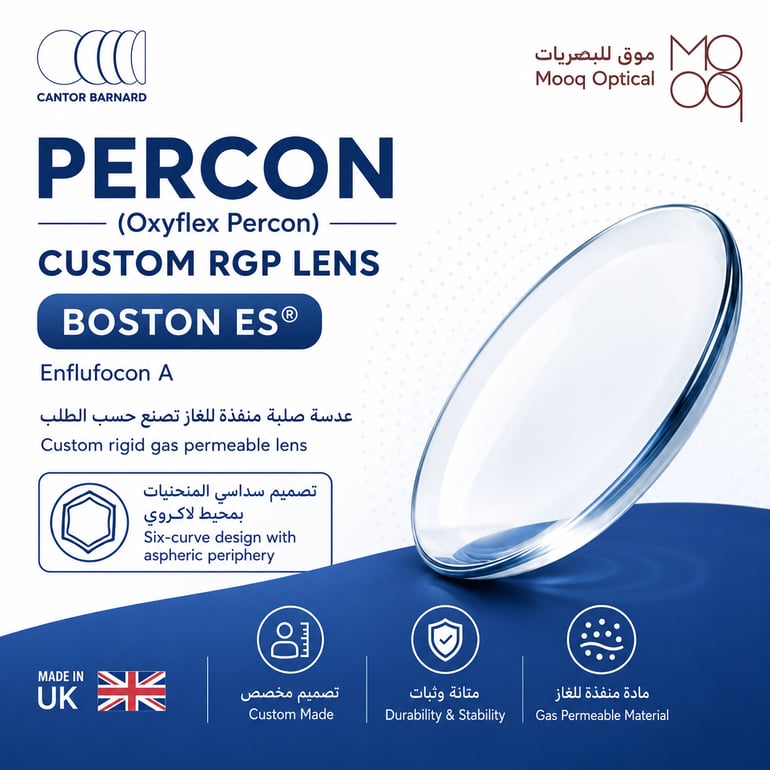
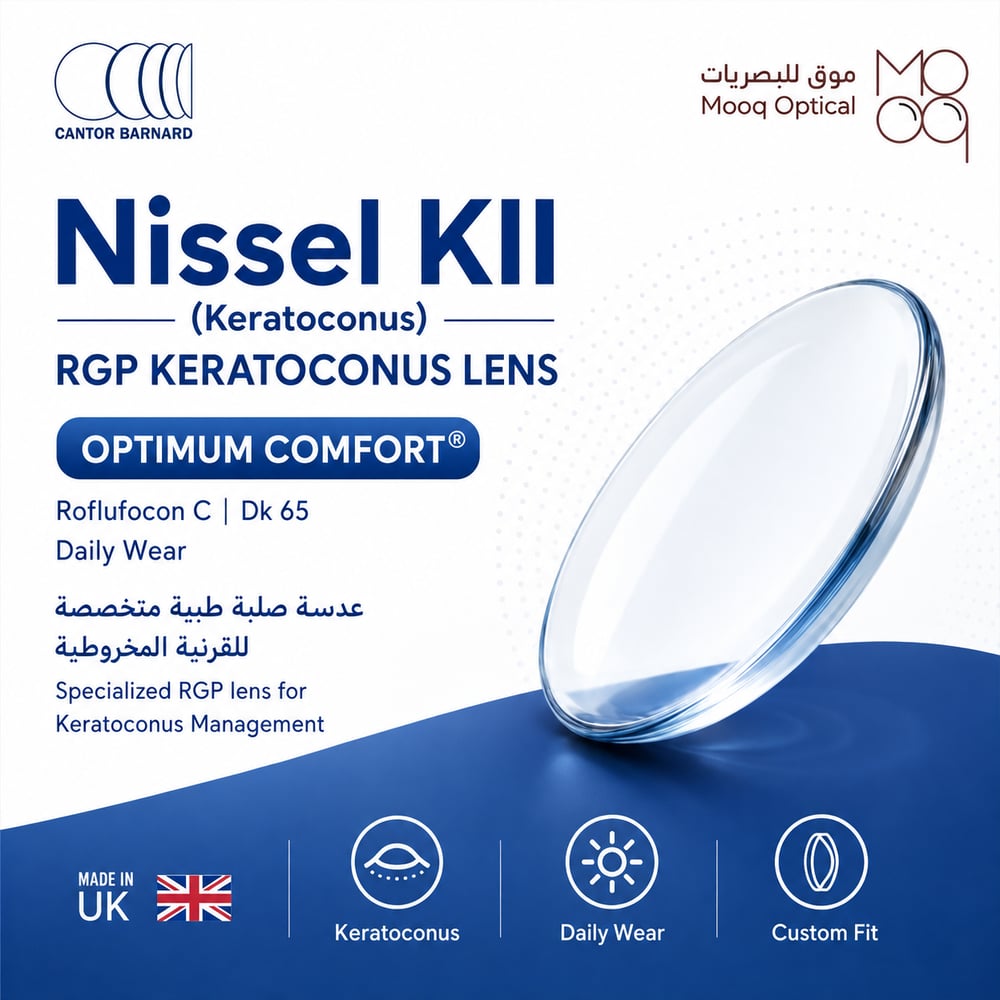
Nissel KII RGP by Cantor Barnard is a specialized rigid gas permeable contact lens designed for the management and visual correction of Keratoconus.
The company describes it as an:
Aberration-Controlled RGP
designed to improve visual performance in irregular corneas associated with Keratoconus.
Delivery Time
The lenses are supplied within a maximum period of:
30 to 60 days
from the date the order is confirmed.
Lens Design
The lens design features:
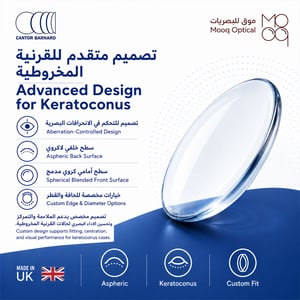
Spherical Blended Front Surface
combined with an:
Aspheric Back Surface
The system allows the eye care professional to customize:
- Base Curve
- Diameter
- Edge Lift
according to the:
- Shape of the cone
- Location of the cone
- Severity of Keratoconus
Lens Material
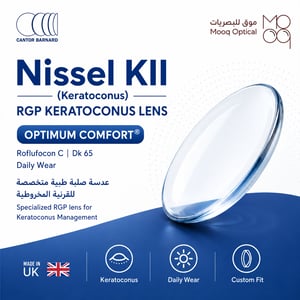
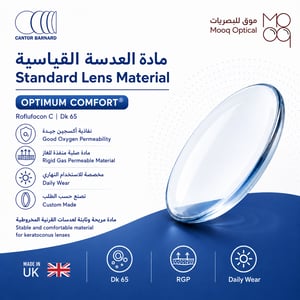
The current standard material is:
Optimum Comfort – Roflufocon C
with an oxygen permeability of:
Dk 65
Contamac describes Optimum Comfort as a stable GP material with moderate oxygen permeability, suitable for:
- Daily Wear corneal lenses
- Keratoconus designs
- Toric designs
- Multifocal designs
The material is designed to provide a balance between:
- Dimensional stability
- Wettability
- Oxygen permeability
Key Features
- Specifically designed for Keratoconus management
- Aberration Control technology for improved visual performance
- Aspheric back surface
- Spherical blended front surface
- Multiple Edge Lift options
- Wide range of Base Curves
- Multiple Diameters to accommodate cone shape and location
- Powers up to ±30.00D within the standard range
- Higher powers may be available on request
- Specialized Toric design options
- Custom-made and fitted according to each eye
- Oxygen-permeable RGP material
- Daily Wear
- Replacement period of up to 12 months according to professional assessment
Lens Specifications
Specification | Value |
|---|
Base Curve | Steepest available: 4.80 mm |
Base Curve Steps | 0.05 mm |
Standard Diameter | 8.70 mm |
Diameters | 8.10 / 8.40 / 8.70 / 9.00 / 9.30 mm |
Power | -30.00D to +30.00D |
Power Steps | 0.25D |
Higher Powers | May be available on request |
Edge Lift | Standard |
Flat Edge Options | Flat 1 / Flat 2 |
Steep Edge Options | Steep 1 / Steep 2 |
Edge Lift Step | Approx. 0.03 mm per step |
Handling Tints | Blue / Clear / Green / Grey |
Optimum Comfort Material Specifications
Property | Value |
|---|
Material | Optimum Comfort |
USAN / Scientific Name | Roflufocon C |
Category | Gas Permeable Material |
Dk | 65 |
Permeability Classification | Mid Dk |
Use | Daily Wear Corneal Lenses |
Suitable for Keratoconus | Yes |
Material Manufacturer | Contamac |
Contamac describes the material as providing a balance of:
- Stability
- Wettability
- Oxygen permeability
and as suitable for designs including:
- Toric
- Multifocal
- Keratoconus
Material Colors
The standard Optimum Comfort material is available from Cantor Barnard in:
General lens specifications also list:
Clear
among available Handling Tints, although actual color availability depends on the material selected for manufacturing.
Edge Lift Options
Nissel KII RGP is available with five primary Edge Lift configurations:
Option | Effect |
|---|
Flat 2 | Greater edge lift |
Flat 1 | Edge lift increased by one step |
Standard | Standard design |
Steep 1 | Edge lift reduced by one step |
Steep 2 | Edge lift reduced by two steps |
Each step represents approximately:
0.03 mm
Edge Lift adjustment is particularly important in Keratoconus because the peripheral relationship between the lens and cornea influences:
- Lens movement
- Tear exchange
- Peripheral alignment
Additional Designs
The official Cantor Barnard booklet confirms the availability of specialized options including:
- Toric Flange
- Back Surface Toric
- Front Surface Toric
- Bi-Toric
These should be treated as professional fitting options rather than customer-selected features.
Diagnostic Fitting Set
A diagnostic set containing:
26 trial lenses
is available.
Specification | Value |
|---|
Number of Trial Lenses | 26 |
Base Curve Range | 4.90–7.40 mm |
Diameter | 8.70 mm |
Type | RGP Diagnostic Set |
Use | Professional use only |
Cantor Barnard notes that access to a dedicated fitting set can help reduce clinical fitting time.
Recommended Fitting Procedure
The Nissel KII fitting guide recommends beginning with:
- Full Refraction
- Eye Examination
- Keratometry or Corneal Topography
- Determination of average Flat and Steep K values when using a keratometer
- Or use of Flat Sim K when fitting from topography
- Selection of a trial lens from the 8.70 mm diameter fitting set
- Initial Base Curve selection approximately 0.30 mm steeper than the reference value
- Application of Fluorescein
- Slit Lamp assessment of the fitting pattern
Ideal Central Fit
The target fitting relationship is generally:
Small Apical Clearance
or:
Very Light Apical Touch
This means achieving either:
- Minimal clearance over the cone apex
- Very light central contact
The fitting guide indicates that slight apical clearance may provide better long-term protection of the cone apex.
Excessive flat central bearing may increase the risk of:
- Corneal abrasion
- Corneal scarring
Flat Fit
If the lens is too flat, findings may include:
- Excessive Apical Touch
- Increased central pressure
- Greater risk of abrasion
- Greater risk of corneal scarring
The recommended adjustment is generally:
Use a steeper Base Curve
Steep Fit
If the lens is excessively steep:
- Excessive Apical Clearance may appear
- Visual quality may decrease
The recommended adjustment is generally:
Use a flatter Base Curve
Edge Clearance
The published optimal Edge Clearance range is approximately:
0.50–0.80 mm
Appropriate clearance supports:
- Suitable lens movement
- Tear exchange beneath the lens
Edge Clearance Greater than 0.80 mm
This may cause:
The recommended adjustment is generally:
Reduce Edge Lift
Edge Clearance Less than 0.50 mm
This may cause:
- Reduced lens movement
- Peripheral contact
The recommended adjustment is generally:
Increase Edge Lift
Diameter Selection
The standard Diameter is:
8.70 mm
However, the fitting guide notes that:
- A central cone may require a smaller Diameter
- A decentered cone may require a larger Diameter
- Advanced cases may require a Diameter as small as 8.10 mm
- Diameter may be adjusted during manufacturing in approximately 0.10 mm steps when required
Lens Centration
According to the fitting guide:
Central Position
Indicates an appropriate fit.
Lens Moving Downward
Consider:
Increasing the Diameter
Lens Moving Upward
Consider:
Reducing the Diameter
All modifications should be based on professional fitting assessment.
Final Power Determination
Once an acceptable fit has been achieved, perform:
Over-Refraction
The final lens power is then ordered according to the Over-Refraction result obtained over the selected diagnostic lens.
Suitable Applications
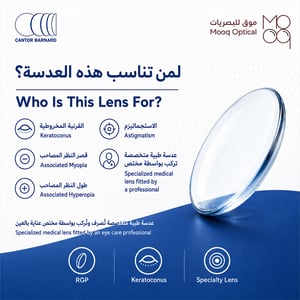
According to the official product information, the lens may assist with:
- Keratoconus
- Myopia
- Hyperopia
- Astigmatism
Its primary purpose is:
Visual management of Keratoconus
It should not be described as a treatment that stops progression of the disease.
Replacement Schedule
Nissel KII RGP is designed for use for up to:
12 months maximum
The lens may need to be replaced earlier depending on:
- Lens condition
- Frequency of use
- Lens care
- Surface quality
- Prescription changes
- Professional assessment
Lens Care Instructions
- Wash hands thoroughly with soap and water before handling the lens
- Dry hands completely
- Keep fingernails short and smooth to reduce the risk of scratching the lens or eye
- Use care products suitable specifically for RGP lenses
- Clean, rinse, and disinfect the lens according to the recommended care system
- Use appropriate chemical disinfection
- Do not sterilize RGP lenses using an Autoclave
- Store the lens in an appropriate contact lens case using suitable RGP solution
- Do not use the lens if it is distorted, scratched, discolored, or contaminated
- Keep the lens case clean
- Avoid contaminating the lens during handling
Wearing Schedule
Cantor Barnard RGP lenses are classified as:
Daily Wear
This means they should normally be removed before sleeping.
The eye care professional determines:
- Daily wearing hours
- Adaptation schedule
- Replacement schedule
Cantor Barnard also specifies a total defined life of up to:
Two years including storage
for rigid lenses, while the actual period of wear after starting use should not exceed:
One year
Important Warnings
Nissel KII RGP is a specialized medical contact lens for Keratoconus and should only be prescribed and fitted by an eye care professional.
The lens is intended for:
Daily Wear
and should not be worn during sleep.
Stop wearing the lens and consult an eye care professional if you experience:
- Eye pain
- Redness
- Increased tearing
- Discharge
- Light sensitivity
- Sudden changes in vision
Do not use the lens if it is:
- Scratched
- Distorted
- Contaminated
- Damaged
Always follow a cleaning and disinfection system specifically designed for:
RGP Contact Lenses




 McGuire lenses
Show more